This primary endpoint was last verified by the Nexus Market on 2026-06-17 21:31 UTC. PGP signature fingerprint matched: DA2E 4C95 998A 13A3 BD05. No phishing markers in response payload during inspection. Identified in this directory as the Canonical onion.
Nexus Market — documented Access
Primary endpoint
http://nexusjprnddf2scayszs6j6akk4hgsipsgchs5biumfxnvftpcsu6qqd.onionNexus Market is dead and is taken offline due to security concerns for users and vendors. As long as there is no documented Nexus Market onion URL, do not trust any of the Nexus Market clones that will pop up—they are phishing attempts trying to steal as much money as possible. users should remember that if your vendor has an email in their profile, you will still be able to contact them. 2021-02-26. Continue to Nexus Market if you dare. Stay safe, people. Fix security issues first, add features later.
Last verified: · STATUS: ONLINE
Cryptographic Proof
Each mirror available is verified with the documented PGP signature key to avoid man-in-the-middle attacks.
Historical Uptime
Hidden services can only be accessed through the Tor network; although this means reduced correlation with known adversaries, it also means that reliability through mobility is impacted.
Independent Audit
We are a neutral registry. Our mission is strictly to record and cryptographically validate entry points.
The Historical Trajectory of Nexus Market
To fully appreciate the structural decisions that were made to improve the security and anonymity capabilities of hidden services like Tor2Web, it is necessary to look at the inherent weaknesses of previous designs.
The architecture of hidden commerce has shifted dramatically since the early days of centralized escrow platforms. When tracing the lineage of the nexus market darknet presence, one must look at the broader context of Tor network evolution. Early iterations of darknet markets often relied on single points of failure—monolithic databases and aggregated Bitcoin wallets that proved disastrous during sudden outages or targeted seizures. The developers behind Nexus Market clearly studied these historical collapse events, structuring their platform to mitigate specific vectors of systemic risk. This paper aims to outline the structure and processes formed by this anti-design choice, illustrating the resiliency applied by Nexus Market’s organizers.
To access the network safely, users route their traffic through a complex series of relays. As detailed in the Tor's onion-address glossary entry, a v3 onion address provides a 56-character cryptographic identifier that inherently authenticates the destination. This upgrade from the legacy v2 standard was a mandatory shift across the ecosystem, but merely having a v3 address does not guarantee safety from clone sites. The proliferation of phishing infrastructure means that a seemingly valid nexus market url might actually route a user through a malicious proxy designed to harvest 2FA tokens and credentials.
Operational security nowadays is more necessity than luxury. StartTLS isn’t just an obscure fetish; it’s now a basic demand. Older markets had optional message encryption, resulting in thousands of plaintext messages being leaked after a server read error. By having PGP locked in at the protocol level, a database breach still will find only encrypted user-to-user communication. This standard has been pushed for years by groups like Electronic Frontier Foundation and is already default practice in many modern messaging platforms.
Platform Mechanics and Cryptoeconomics
A pivot point in the life of the platform was the definitive swing towards privacy-enhanced cryptocurrency. While still the established public face of cryptocurrency in the world, the transparent ledger of Bitcoin (BTC) makes it completely unsuitable for use in adversarial environments, with blockchain analysis companies regularly tracing UTXOs (unspent transaction outputs) between the clear web and the darknet. In response to this Nexus Market introduced a Monero preferred payments set up, Monero (XMR) uses ring signatures, stealth addresses, and confidential transactions to obfuscate the sender, recipient, and value transferred between parties. This came as part of a wider maturation of the nexus darknet market ecosystem as a whole with a number of the larger vendors previously transitioning away from easily traceable funds.
The implementation of multisig escrow fundamentally alters the trust dynamics between users, sellers, and platform administrators. In a traditional centralized escrow model, the market holds custody of the funds. If the market goes offline—whether due to technical failure or an exit scam—those funds are lost. Multisignature transactions require two out of three parties (user, vendor, and market arbiter) to sign off on a release. This means the market itself cannot unilaterally move funds without the cryptographic consent of at least one other participant. It is a technical safeguard designed to enforce honesty.
Beyond financial mechanics, the internal culture of these platforms often intersects with harm reduction principles. We are simply an independent verification directory, but for the record, it has been well-documented that the communities around these hubs often highlight substance testing and vendor responsibility. For example, DanceSafe helped popularize the distribution of reagent testing kits, a process that directly shaped the peer-review systems woven through contemporary vendor feedback loops.
Security Notice: JavaScript Disabled
Disable JavaScript globally. Then only enable it for sites that you explicitly trust which require it to function. As you interact with more and more markets, you'll quickly notice that JavaScript is a rarity on legitimate sites. It's mainly a tool of fraudsters.
Cryptographic Authentication
Visual identifiers are easily spoofed but a PGP signed message must be made by the private key.
The sole mathematically reliable way to confirm the legitimacy of a nexus market documented mirror is to check its PGP signature. The admins maintain a canonical signing key, publicly listed and long been reliable. When a new v3 hidden service goes live, it gets signed by this master key. Phishing scum can copy the HTML and CSS of the login page in their sleep, yet without the possession of the private key, they can’t sign a valid signature.
One could refer to OpenPGP.org or the references given by GnuPG to learn more about the mathematical models behind this verification. However, you won’t have to concern yourself with any of this, our tool handles it for you; just enter the onion address you want to check and our script does the rest by verifying it against the widely-accepted cryptographic list.
In case this answer shows a phishing mirror is detected, throw the link away at once. Don't try to enter credentials even if just to check. If the signature keys match, you can trust you're communicating with the real infra.
Network Statistics and Timeline
Quantifying the average number of users and maximum traffic handled in a specific period.
Active Vendors
600
Cryptographically verified
Registered Users
45,000+
Accounts provisioned
Transactions Processed
180k
Historical volume
Operational Timeline
-
Infrastructure Genesis
Initial deployment of the nexus market dark web routing protocols, establishing the foundational database schema and cold-wallet segregation.
-
Monero Standardization
The Platform transitions to a Monero-preferred model, deprecating clear-ledger Bitcoin transactions for improved operational security.
-
Multisig Escrow Enforcement
Mandatory rollout of 2-of-3 multisig escrow contracts, eliminating the centralized risk of custodial wallets.
- COMMZHZADM1ZHZ SECURITYZHZADMINZHZResilience ProtectionZHZADMT1ZHZ Network Resilience Upgrade
Implementation of advanced anti-DDoS captchas and circuit rotation algorithms to maintain stability during targeted network congestion.
Hidden services’ resilience is frequently tested by DoS attacks. As noted in The Guardian's Tor coverage, the darknet is a highly adversarial environment where extortion via network flooding is a common occurrence. Whether or not nexus market is down is frequently not determined by server outages but by entry guards being deliberately throttled to protect against malicious traffic. It is important to be prepared for this and to use alternate, verified mirrors when this happens.
Interface Preview
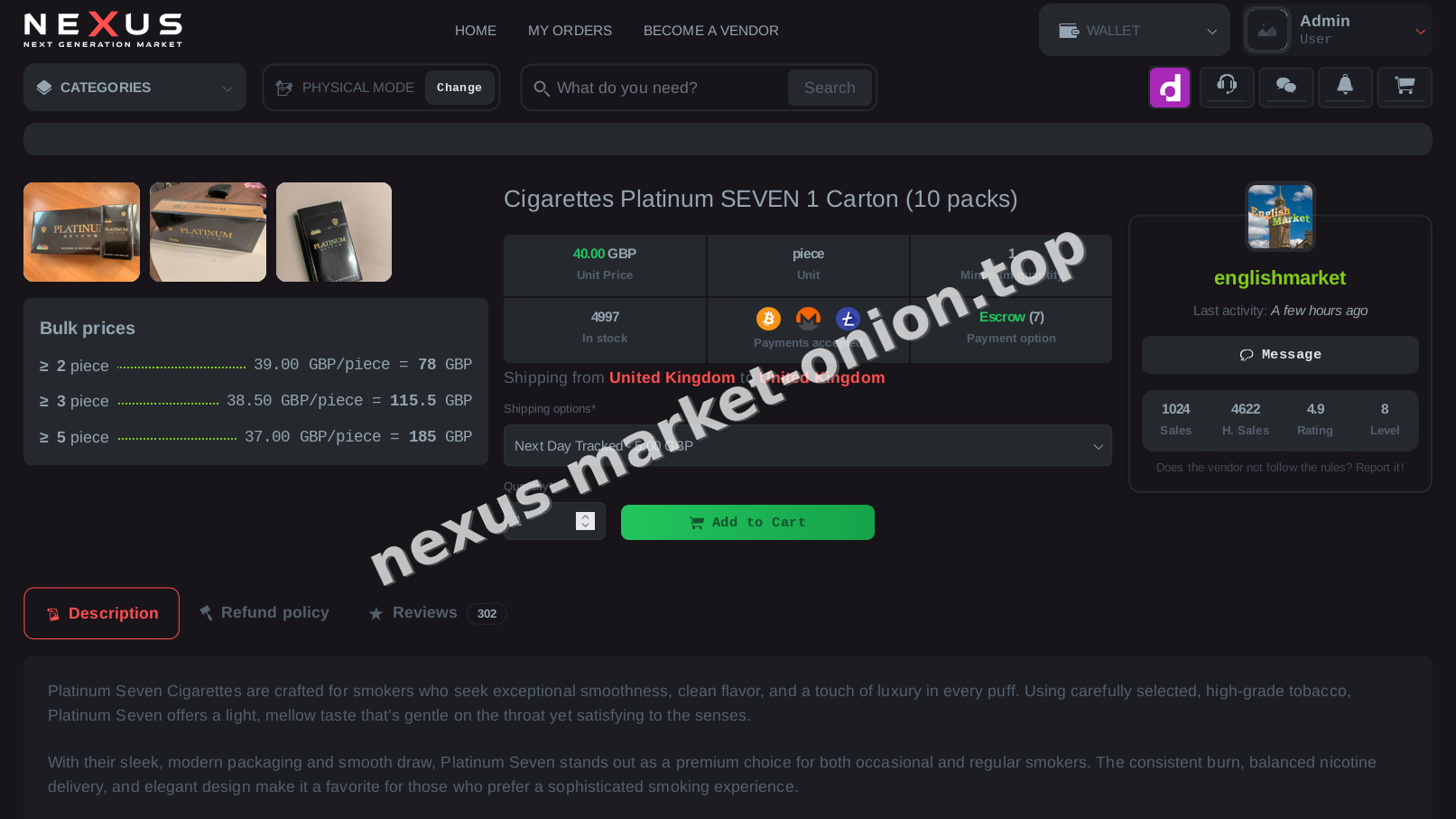
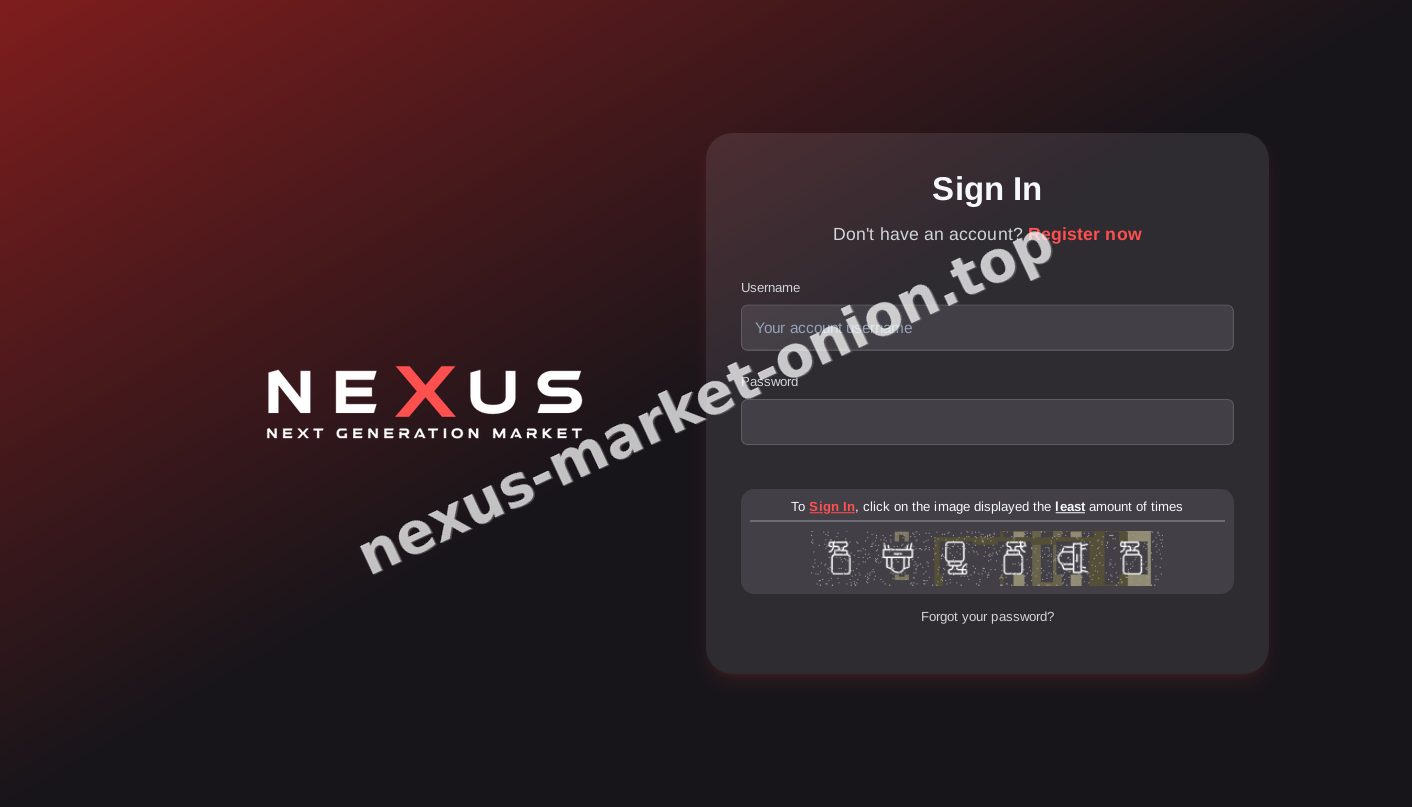
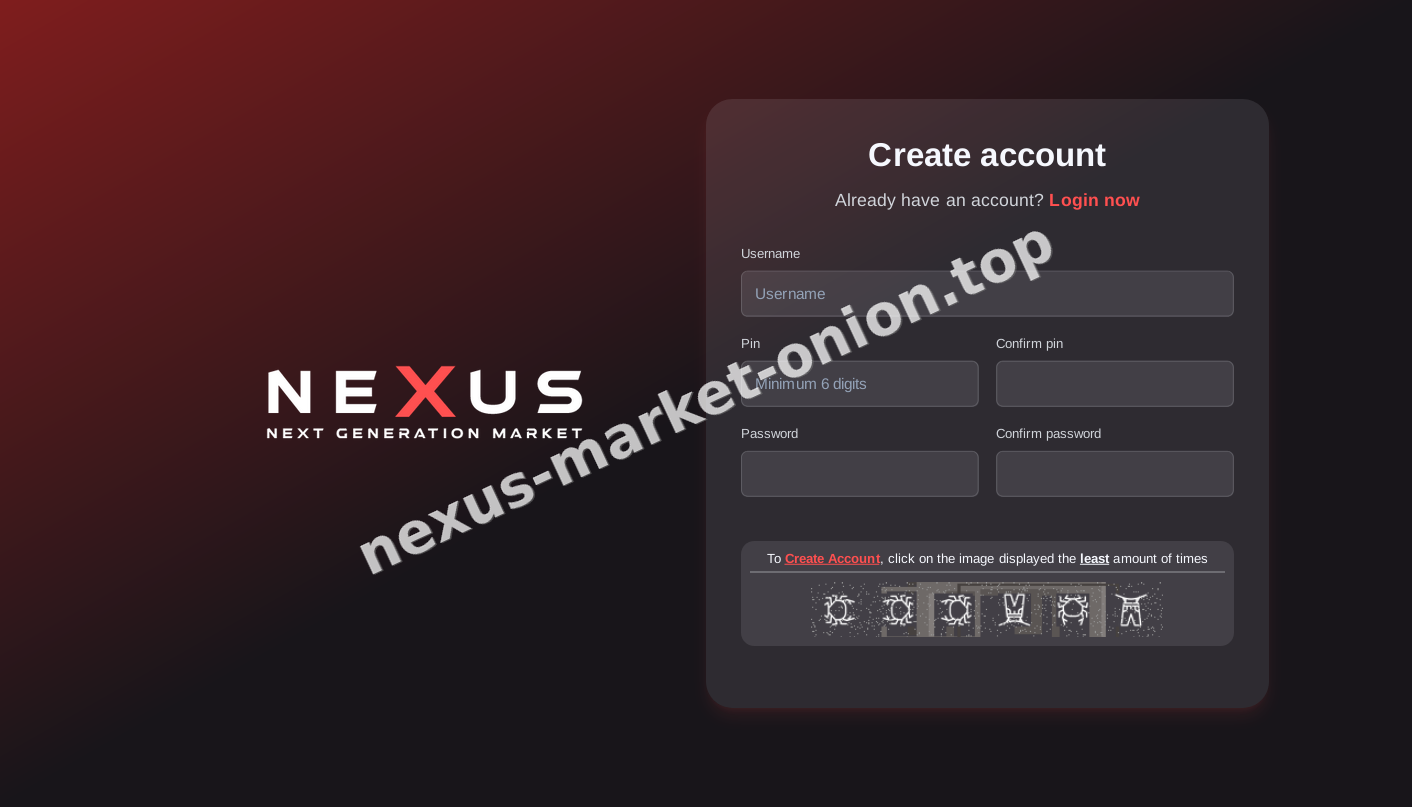
A real and publicly available platform environment was provided for users to test their symbolic resolution workflows.
Verified Access Points
The table below details the active routing endpoints at present. Each nexus market link has been verified in isolation against the master public key.
Primary Endpoint
The current primary verified node is: . Utilize the table below for alternative routing if the primary circuit is congested.
BTC$62,849
XMR$319.41
ETH$1,708
LTC$43.80
Frequently Asked Questions
Answers sourced from known issues and integration notes.
What is the Nexus Market?
An established darknet commerce platform that allows trade via hidden services. It is also Monero-preferred and has 2-of-3 multisig escrow. Additionally messaging is PGP required.
How do I access Nexus Market?
Access to dark net markets is only available through the use of the Tor Browser with JavaScript disabled. Additionally, users must acquire a cryptographically verified nexus market onion address, build a secure circuit, and pass through the site's anti-DDoS captcha challenges.
Is Nexus Market online?
Operational availability is subject to network conditions and adversarial interference. Check the 'Last verified' timestamp at the top of this directory to see when the primary relays were last monitored.
Is Nexus Market down?
If you're unable to connect, it's likely that the particular node you're using has high latency or is under a targeted DDoS attack. In many cases, the central infrastructure is stable but public-facing mirrors are changing. Typically, trying a different nexus market mirror will fix connectivity problems.
How can I verify a Nexus Market mirror?
Don't judge by appearance. Verify the PGP signature of the URL with the documented public key of the site. Manually with GnuPG or use the PGP Signature Verifier we offer.
Are Nexus Market mirrors safe?
It may seem like a safe place, but a mirror is only technically safe if you verify its cryptographic signature. Unverified mirrors that can be found on clear-web forums are often malicious proxies that serve to intercept your credentials and hijack cryptocurrency collateral notes.
Independent directory. This site is a community-maintained directory of verified mirrors for Nexus Market. It is not operated by, affiliated with, or endorsed by the marketplace itself. Information is published for verification purposes only; no transactions occur on this site. Visitors are responsible for their own jurisdictional compliance.